Wilderness: Expressing the Wild Side Within and Without
by Bruce Petrie Jr., Board of Trustees Chair, Cincinnati Art Museum
11/6/2026
As the Cincinnati Art Museum celebrates The Art of Charley Harper: Creatures Wild and Tame, SketchCAM pauses to consider interpretations of “wilderness.” This theme is a vibrant one at the museum. CAM’s wild side is not only part of Harper’s vision but presents itself in works by other artists in the collection. There are the wildernesses of Ansel Adams, Frederic Church, Rockwell Kent, and Utagawa Hiroshige, and others. In each—whether through photography, painting, or prints—wilderness isn’t so much “out there,” beyond the artists, as it is within their creative imaginations.
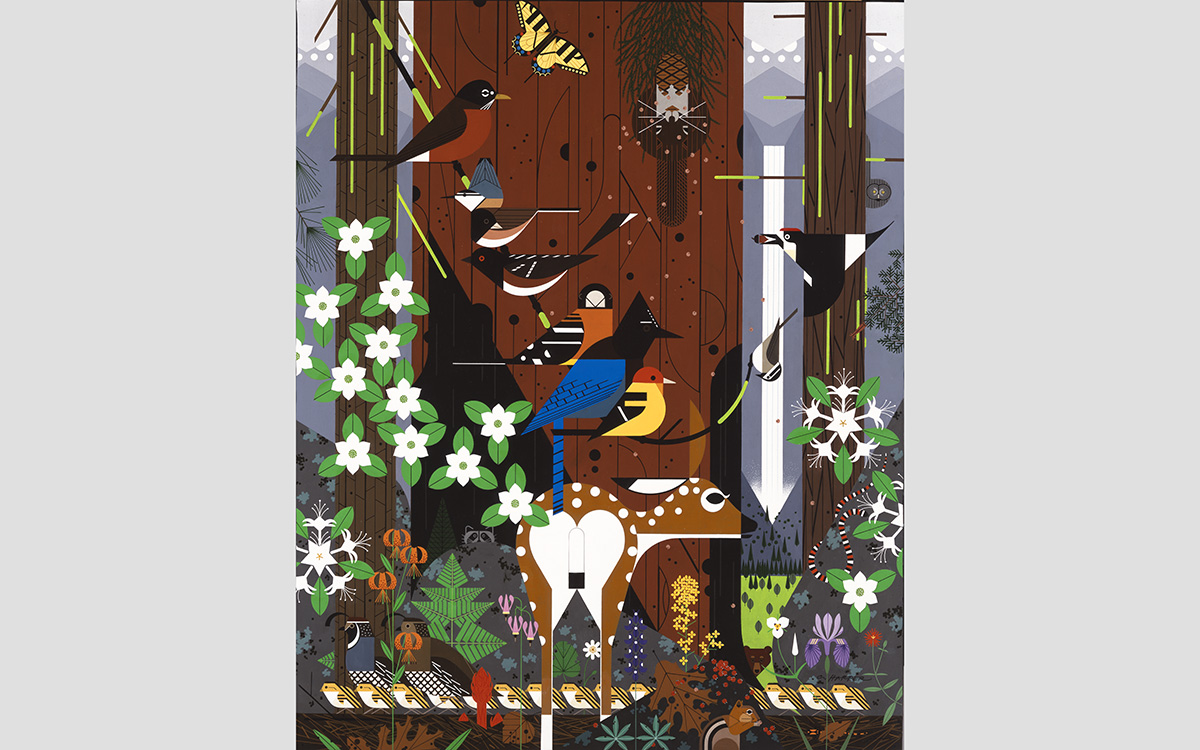
Charley Harper (American, 1922–2007), The Sierra Range, circa 1985–90, acrylic on canvas mounted on board, Courtesy of the National Park Service, Harpers Ferry Center, © Charley Harper, all rights reserved
In Harper’s works, the wilderness is seen in flat designs and cut-out shapes of line and color with the artist’s unique eye for the “tell-tale creaturely,” interpreting how wilderness connects with us humans.
In Adams’s photographs, the lens and the artist’s darkroom craft interpret wilderness in a black-and-white scale, all color implied, grandeur simplified into what we, the viewers, can visually handle.
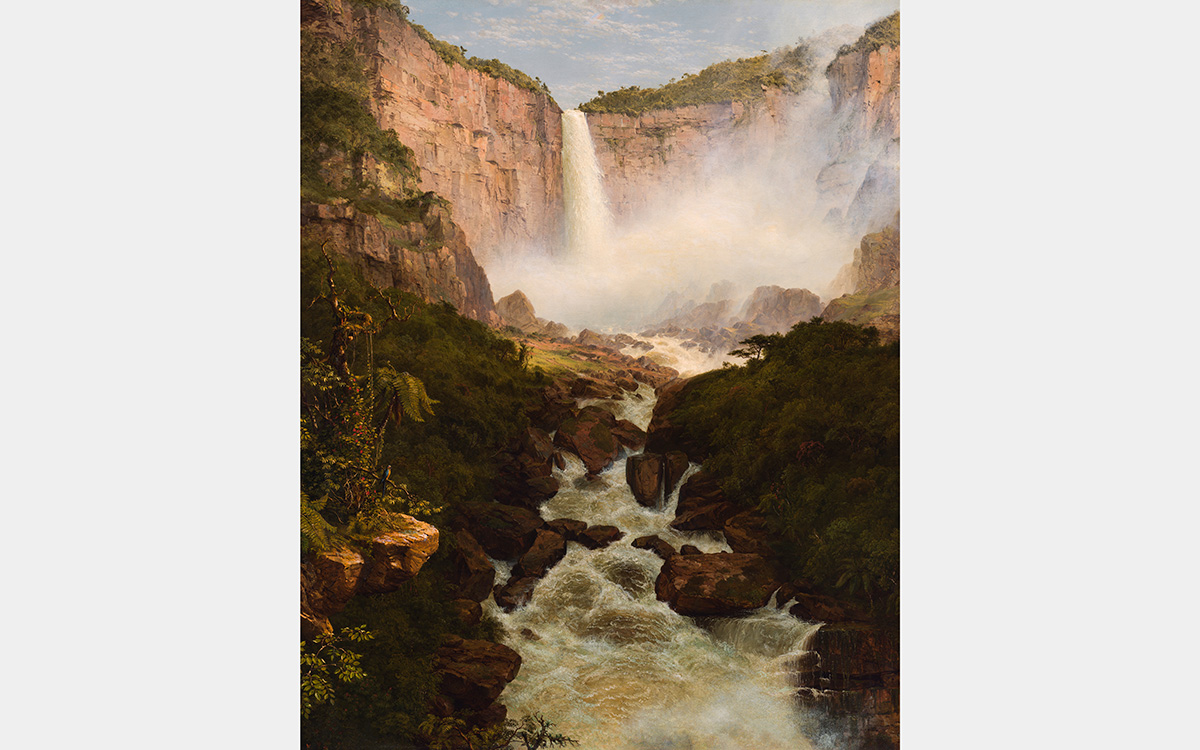
Frederic Edwin Church (American, 1826–1900). The Falls of Tequendama, Near Bogotá, New Granada, 1854, oil on canvas, The Edwin and Virginia Irwin Memorial, 1971.30 — On display in Gallery 217.
In Church’s paintings, the artist first sketched wild waterfalls in Colombia en plein air in pencil and gouache. The artist-adventurer risked life and limb, hiking into the wild to get the visual DNA first-hand for the monumental oil painting to follow.
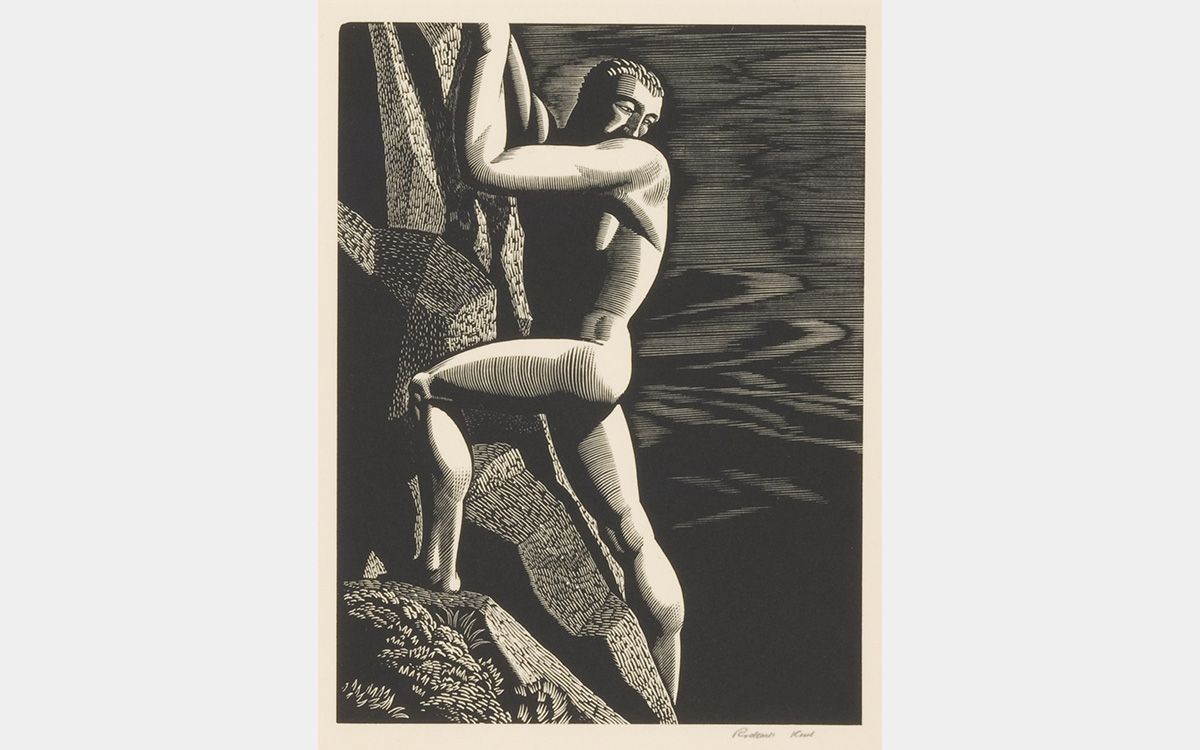
Rockwell Kent (American, 1882–1971), Mountain Climber, 1933, wood engraving, Gift of The Print Club of Cleveland, 1933.44
In Kent’s prints, his adventures in remote places—including Alaska and Greenland—inspired woodcuts carved on site resulting in his graphic prints on paper, placing human figures within constellations and wilderness landscapes.
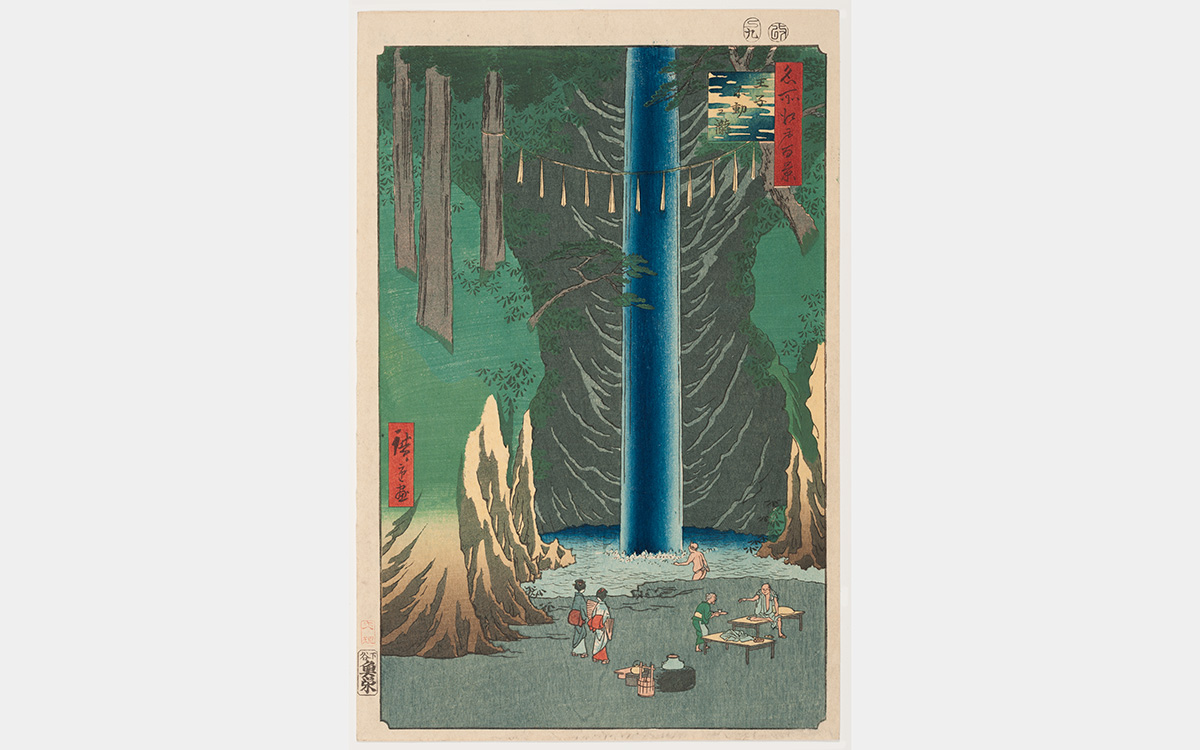
Utagawa Hiroshige (Japanese, 1797–1858), Fudo Waterfall, 1857, color woodcut, Gift of the Sidney Pritz Estate, 1941.400
And in Hiroshige’s prints, flattened imagery of mountains, fog, stands of pine, and plunging waterfalls, reflect atmospheric visions of wild landscapes seen with an ancient eye for harmony.
The common denominator is the way these four artists experience wilderness—nearly shocked and shaken awake by how ineffable wilderness really is—and their creative work of getting a meaningful human handle on the wild. Sometimes their interpretations present idealized images, pictures of order and harmony within nature’s vastness. At their best, their achievements reveal the wilderness both within ourselves and beyond in the physical landscape.
Why should we care to learn about how wilderness is both within and without? It may seem irrelevant to the cost of gas or the everyday practicalities of life. But a visit to the art museum to experience Harper’s (and other artists’) interpretations of “wild and tame” allows us to feel that our own inner wilderness is not so far away, but present within, and a vital aspect of the human spirit.

Cincinnati, OH 45202
Toll Free: 1 (877) 472-4226
Museum Hours
Museum Shop
Terrace Café
Library
Cincinnati Art Museum is supported by the tens of thousands of people who give generously to the annual ArtsWave Campaign, the region's primary source for arts funding.

Free general admission to the Cincinnati Art Museum is made possible by a gift from the Rosenthal Family Foundation. Exhibition pricing may vary. Parking at the Cincinnati Art Museum is free.
Generous support for our extended Thursday hours is provided by Art Bridges Foundation’s Access for All program.

General operating support provided by: