Lions and Tigers and Art! Oh My!
by Bruce Petrie Jr., Board of Trustees Chair, Cincinnati Art Museum
7/30/2026
Zoos and art museums have more in common than you may think. At our amazing Cincinnati Zoo, you’ll see not only animals, but how wildlife artists see and interpret creatures great and small. Take for example two well-known Cincinnati painters, John Ruthven and Charley Harper.
A Ruthvenesque bird flies with literalism; a Harperesque bird flies with minimalism.
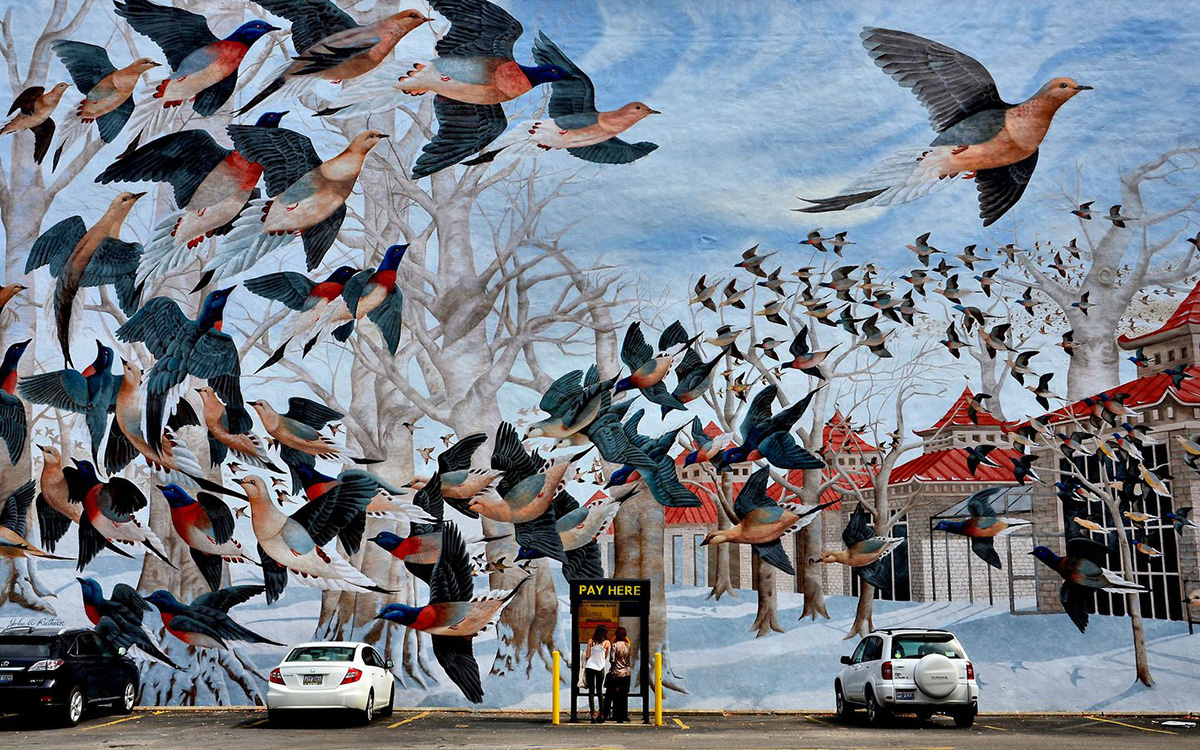
Photo courtesy Richard Ebert, Travel Photographer, © Encircle Photos.
Martha: The Last Passenger Pigeon mural by 1001 Colors; John Ruthven, designer; Tim Parsley, lead artist.
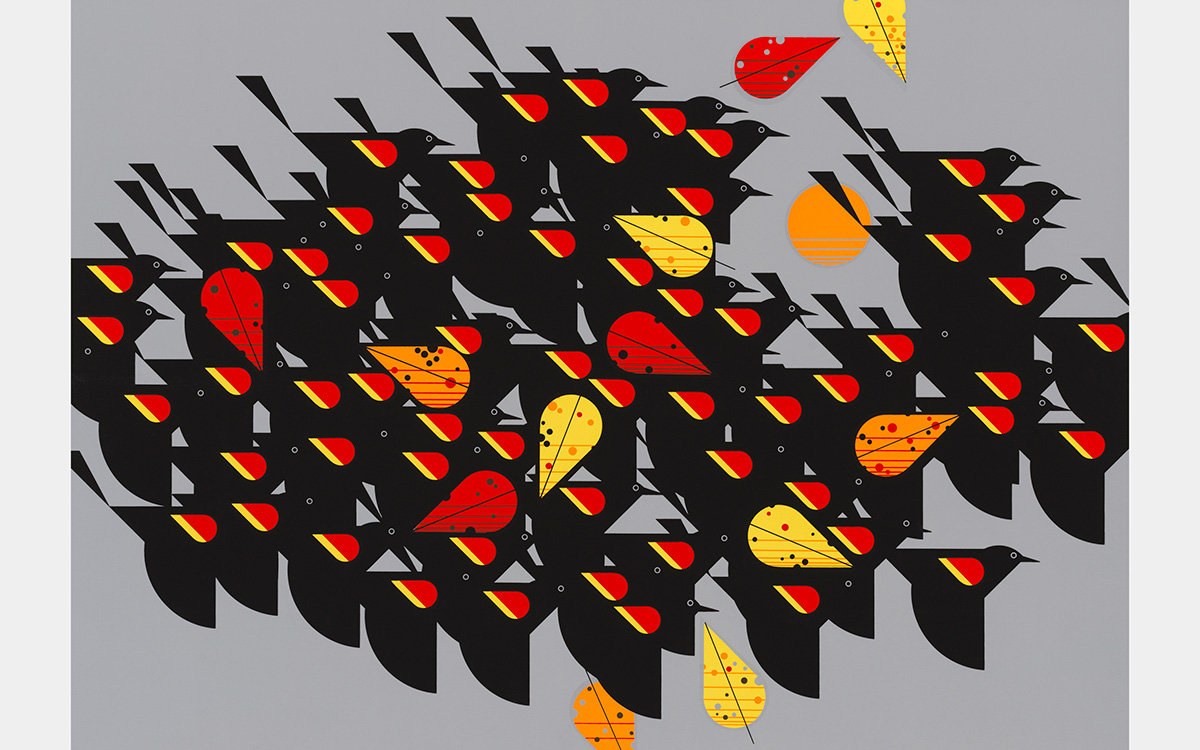
Charley Harper (American, 1922–2007), Birds of a Feather, (detail) 1974, color screen print, Gift of Donna Herwarth in memory of Carl J. Herwarth, 2003.175
Both are convincing fliers; they just convince in different ways.
The more we visit and experience Cincinnati’s zoo and art museum, the more we may learn about the different types of visual interpretation. You see an elephant, the proverbial hard-to-miss “elephant in the room.” But the more you look, the more closely you observe, the more ways you can interpret “elephant.” Its eyes, for example, are tiny compared to the rest of its body, but can’t we see some old wisdom in them, a certain dignity in the way this magnificent creature is?
Similarly, each time we go for a visual walk in van Gogh’s Undergrowth with Two Figures, we see more ways to interpret its meanings. Why did van Gogh include two figures, companions on a woodland walk, rather than a solitary figure alone? The artist certainly knew loneliness; his love of art was his companion. The two figures use symbolism to convey “you-are-not-aloneness.”
In the study of art there’s a useful term: visual hermeneutics. The word means methods of interpreting what you see. It’s about asking ourselves: what sort of lens are we using? As we look up and see a hawk in flight, are we seeing an object, nothing more? or does the flying hawk make us wonder what the facility of natural flight is like, a true birds-eye view? And if so, how might one draw or paint or sing or otherwise convey this feeling?
So, whether at the zoo or the art museum, there’s an opportunity to unlock your perspective, to imagine, “What if I looked at it this way rather than that?” After all, that is a reason to be amazed.
The Art of Charley Harper: Creatures Wild and Tame will be on view at the Cincinnati Art Museum from October 16, 2026 through March 7, 2027.
Related Blog Posts

Cincinnati, OH 45202
Toll Free: 1 (877) 472-4226
Museum Hours
Museum Shop
Terrace Café
Library
Cincinnati Art Museum is supported by the tens of thousands of people who give generously to the annual ArtsWave Campaign, the region's primary source for arts funding.

Free general admission to the Cincinnati Art Museum is made possible by a gift from the Rosenthal Family Foundation. Exhibition pricing may vary. Parking at the Cincinnati Art Museum is free.
Generous support for our extended Thursday hours is provided by Art Bridges Foundation’s Access for All program.

General operating support provided by: