Damascus Room Conservation
by Caroline Hernandez, Kress Conservation Fellow
5/13/2026
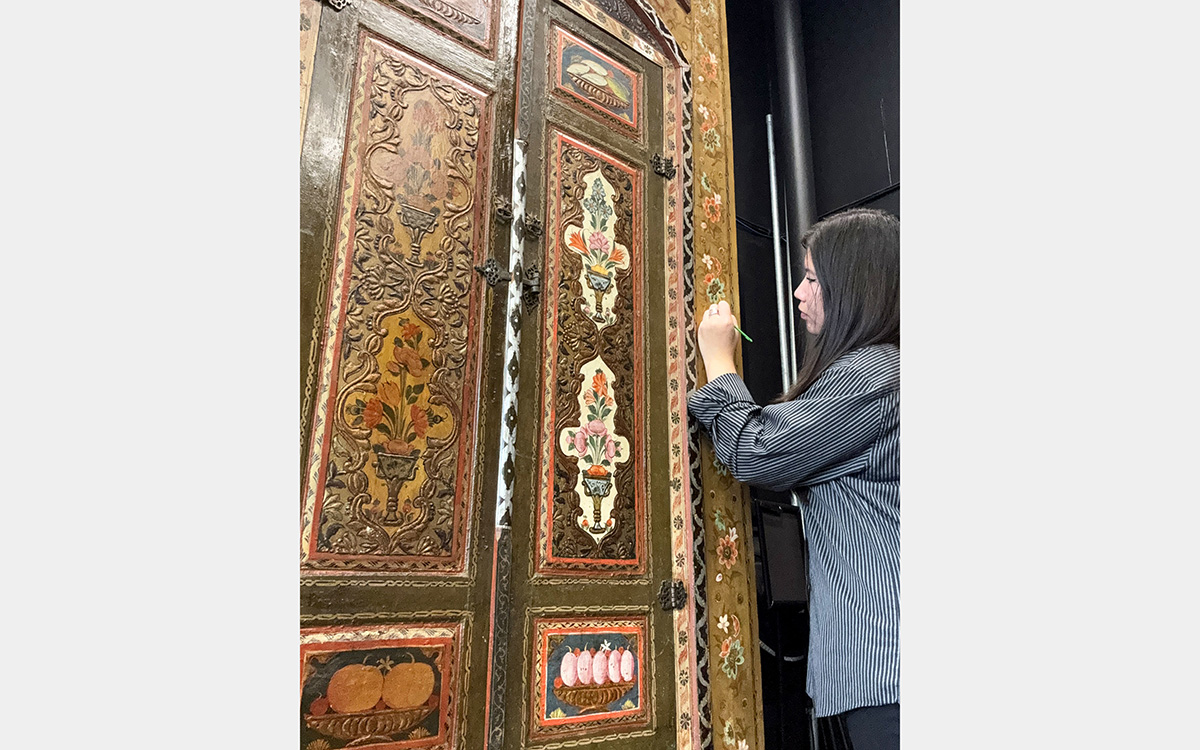
Kress Conservation Fellow Caroline Hernandez, treating Damascus Room panels in the museum's conservation lab.
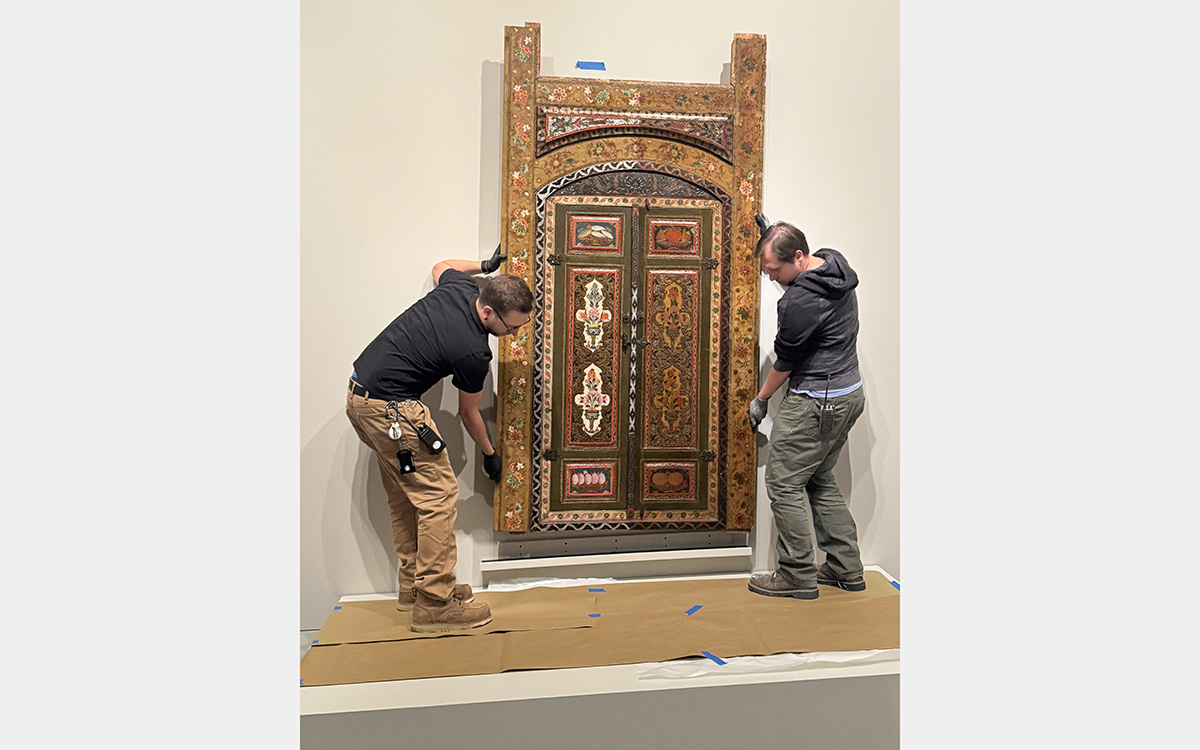
Installation team installing half conserved panels from the Damascus Room in the museum's Conversations Gallery.
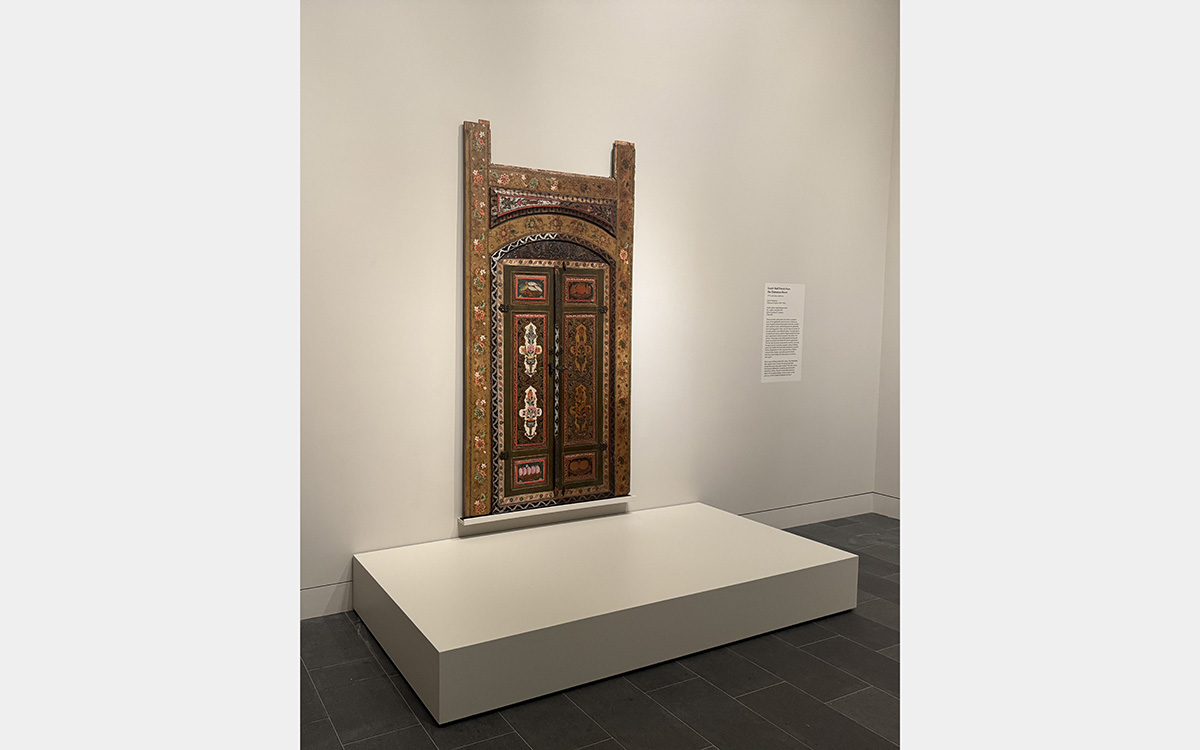
Half-conserved panels on display in the Conversations Gallery. You can see the "before" on the right and the "after" on the left. The panels will be on view until June 17, 2026.
Last fall, the Cincinnati Art Museum began a multi-year conservation project focused on one of the museum’s most beloved spaces: the Damascus Room.
The Damascus Room is made up of intricately decorated wooden panels. Some of the panels date as early as 1712, while others were likely added in the twentieth century before the room entered the museum’s collection. Together, they create a remarkable example of the luxurious interiors once found in homes of eighteenth-century Damascus, Syria.
The room’s wooden surfaces are decorated using the ‘ajami technique, a process in which artisans applied a paste of glue and gypsum to build raised decorative patterns. These textured designs were then covered with shimmering metallic leaf and richly colored paints and glazes, creating dramatic contrasts of light, texture, and color.
Over the centuries, the room has undergone several restoration campaigns. Examination and historic records suggest that at least three previous conservation treatments were carried out before the current project began. During those earlier efforts, protective coatings were applied to the painted surfaces. Although intended to preserve the decoration, these coatings have naturally aged and darkened over time, masking many of the room’s original vibrant colors and details.
The museum’s current conservation campaign focuses on carefully removing these later coatings to reveal the brilliance of the original surfaces beneath. So far, conservators have completed treatment on three sections of paneling. One section, now partially conserved, is currently on view in the Conversations Gallery (adjacent to the museum’s Entry Lobby) where visitors can see the conservation process firsthand and glimpse how the restored room may eventually appear.
Visit the gallery to experience this transformation in progress through June 17 and follow along for future updates as conservation of the Damascus Room continues.
Related Blog Posts

Cincinnati, OH 45202
Toll Free: 1 (877) 472-4226
Museum Hours
Museum Shop
Terrace Café
Library
Cincinnati Art Museum is supported by the tens of thousands of people who give generously to the annual ArtsWave Campaign, the region's primary source for arts funding.

Free general admission to the Cincinnati Art Museum is made possible by a gift from the Rosenthal Family Foundation. Exhibition pricing may vary. Parking at the Cincinnati Art Museum is free.
Generous support for our extended Thursday hours is provided by Art Bridges Foundation’s Access for All program.

General operating support provided by: