Canids of Eden Park
by Franck Mercurio, Publications Editor
3/11/2026
Driving through Eden Park in early February, I spotted two large dogs trotting out of the woods and across the intersection in front of me. It took a second to realize that they were not dogs, but coyotes! The pair didn’t seem to mind the presence of my Honda—instead, they simply marched on and disappeared into the trees on the opposite side of the road.
The coyotes’ unexpected appearance got me thinking about our human fascination with canids—both wild and domestic—and how they populate our legends, imaginations, and works of art across generations (not to mention our urban parks!) The following is a brief field guide to our four-footed furry friends in and around the Cincinnati Art Museum.
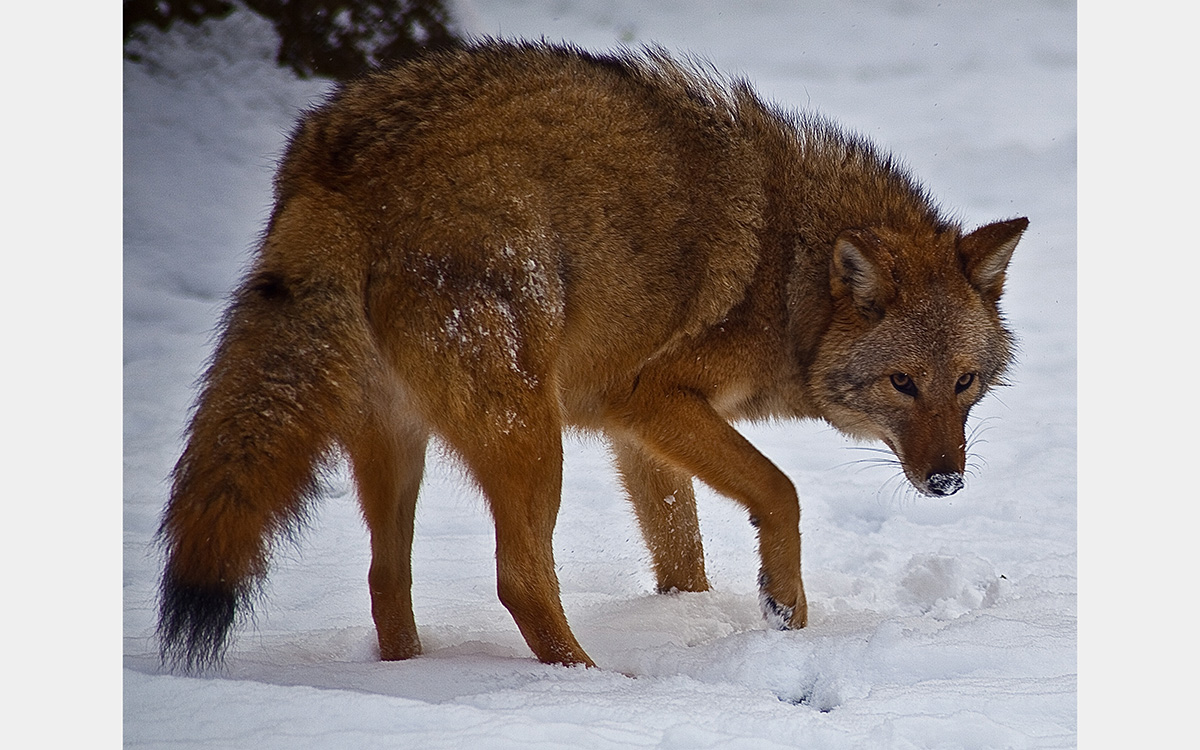
Photo courtesy forestwander.com
Coyote
Canis latrans
Before we plunge into the art, what’s up with the coyotes in Eden Park? Writing for Cincinnati Parks, naturalist Gia Giammarinaro states that coyotes are “incredibly versatile and rather intelligent wild dogs” and as predators are “a positive thing in our urban environment” by helping to keep rodent, rabbit, and deer populations in check. Coyotes generally shy away from people but are more visible from January through March, their breeding season. To learn more, check out Giammarinaro’s post.
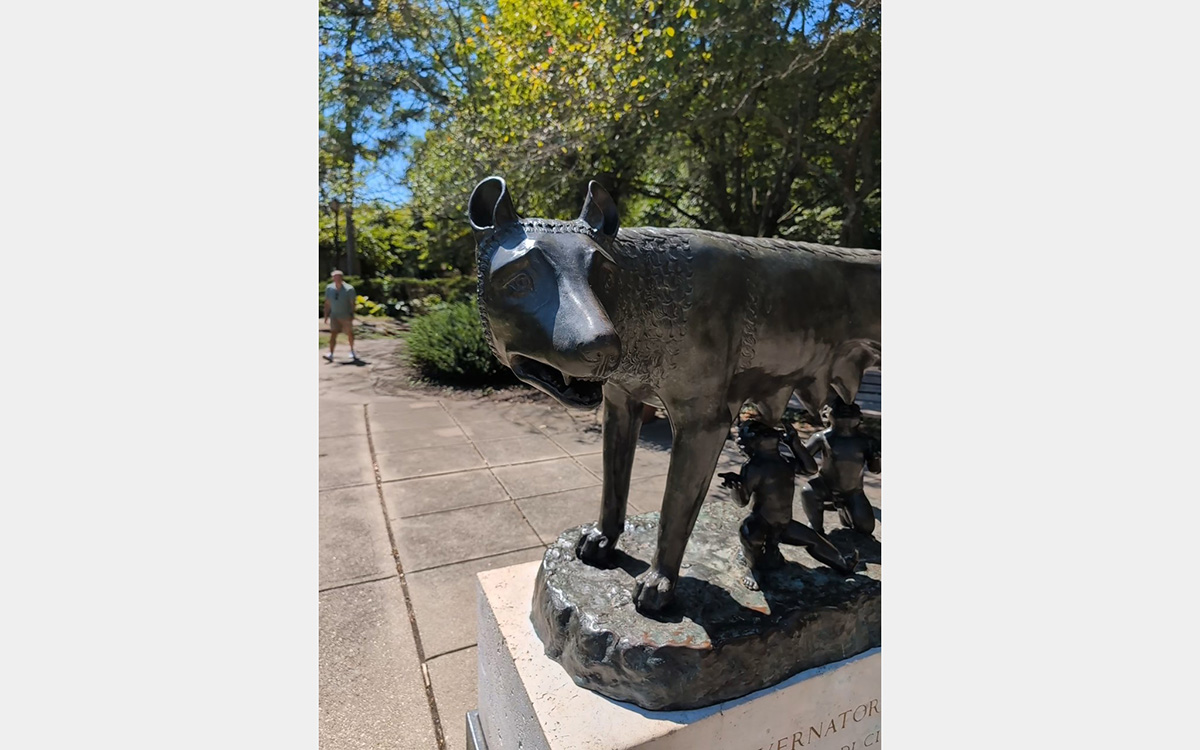
Lupa Capitolina (Capitoline Wolf), 2024 (copy of original in Capitoline Museum, Rome), bronze, photo courtesy author
Wolf
Canis lupus
Wolves wandering through Eden Park? Only one—made of bronze—a copy of the famous “Lupa Romana” housed at the Capitoline Museum in Rome. The sculpture depicts a female wolf who legend says rescued the infant twins Romulus and Remus, the founders of ancient Rome, from the Tiber River. Stylistically, it’s a bit of an odd mix. Long considered Etruscan (eighth to third centuries BCE), scientific research suggests a much younger age for the wolf, about 1000–1200, based on radiocarbon analysis and knowledge of medieval bronze casting methods. Italian sculptor Antonio del Pollaiuolo (1431–1498) likely added the infant figures to the original during the Italian Renaissance in the late 1400s.
On view in Eden Park near Twin Lakes.
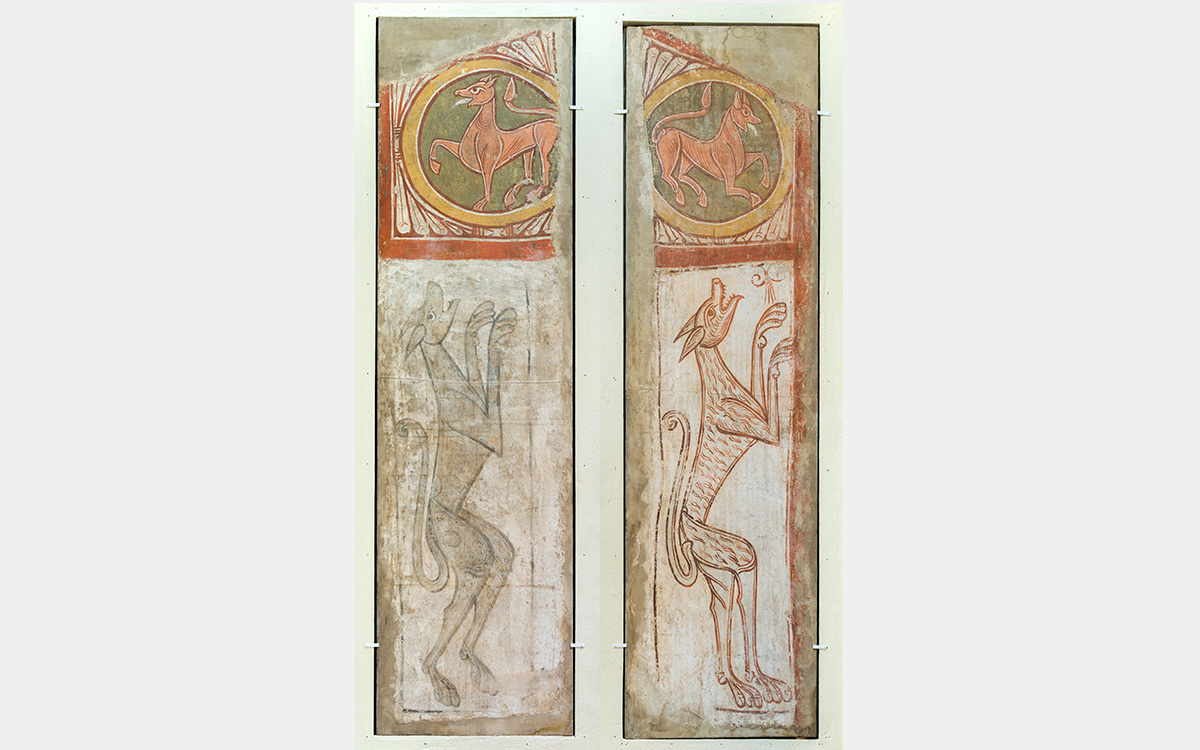
Master of San Baudelio (Spanish, 1133–1166) and Master of Maderuelo (Spanish), Wolves from the Ermita de San Baudelio, circa 1125–1150, fresco transferred to canvas, The Edwin and Virginia Irwin Memorial, 1964.64 and 1964.65
Wolf
Canis lupus
Wolves inside the art museum? Yes, indeed! Two frescos from the hermitage of San Baudelio in Berenga, Spain, depict wolves. Constructed sometime in the early 1000s, the Christian chapel contained a series of murals on two levels; the upper walls included scenes from the life of Christ and images of Saint Baudelio, while the ground level featured hunters and animals, including our two wolves. Why paint wolves and hunting scenes inside a church? According to one source, "the mural ensemble has a symbolism that weaves together hunting, war, power, and the secular struggle between good and evil.”
On view in Gallery 203.
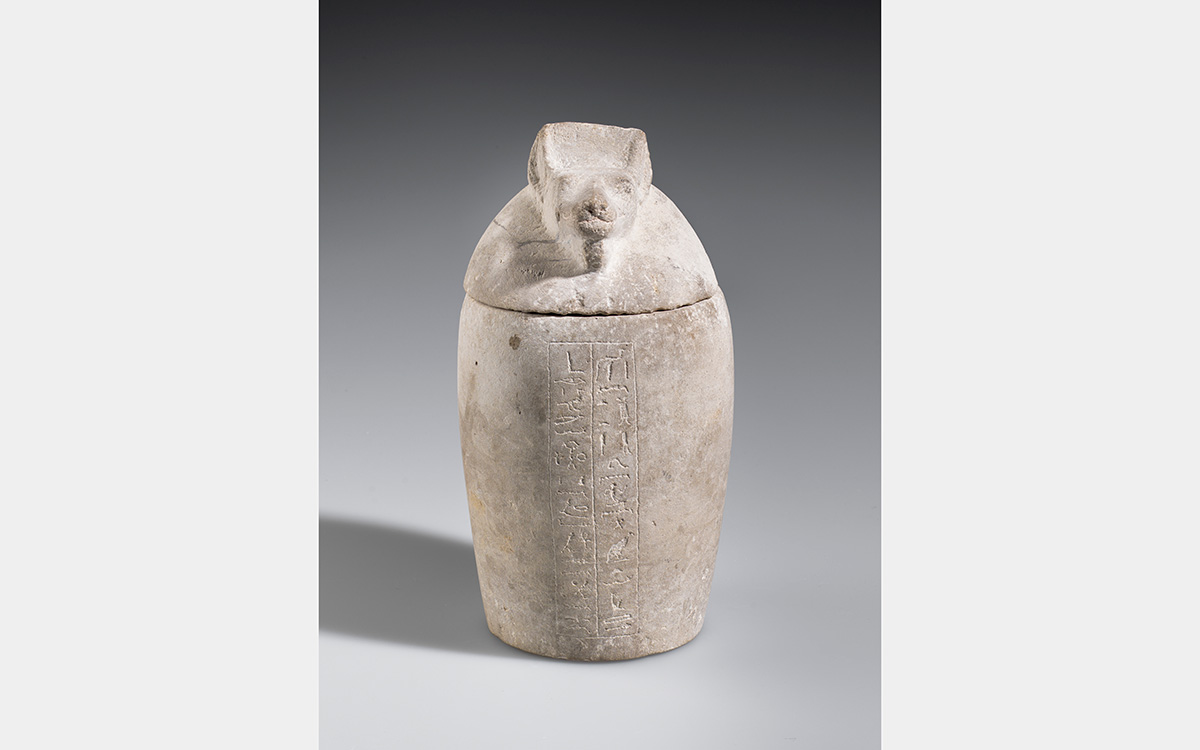
Canopic Jar with Lid Depicting Sons of Horus (Duamutef), circa 712–30 BCE, limestone. Gift of Millard F. and Edna F. Shelt, 1947.398
Golden African wolf
Canis anthus
Beginning as early as the Old Kingdom (circa 2700–2200 BCE), the ancient Egyptians used canopic jars to house a deceased person’s internal organs during mummification practices. This jar represents the jackal-headed god Duamutef who protected the stomach. Recent genetic studies suggest that the golden jackal—the model for both Duamutef and Anubis, another canine-headed Egyptian god—is actually a species of wolf, now dubbed by scientists Canis anthus or the golden African wolf. Regardless of classification, the dog-like head on this jar connects canids with the idea of protection, a near universal association.
On view in Gallery 101.
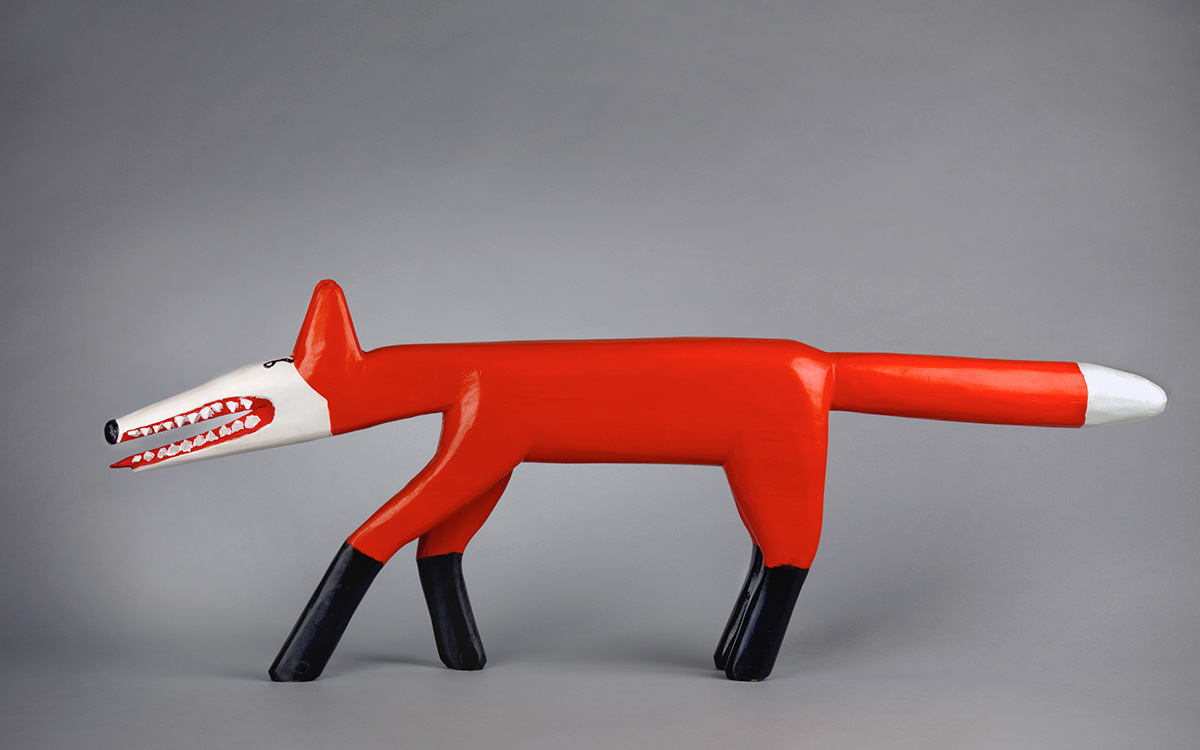
Minnie Adkins (American, born 1934), Greg Adkins (American, born 1975), Red Fox, 1994, acrylic on carved wood, Gift of Robert A. Lewis, 2013.227
Red Fox
Vulpes vulpes
Raised on a farm in eastern Kentucky, Minnie Adkins’s favorite pastime growing up was whittling, a hobby which eventually led to her career as an artist. Sculpted from a single piece of wood and painted bright colors, the artist gave this fox a mischievous expression with teeth bared and eyes focused straight ahead as if confronting a rival—or maybe a tasty rabbit! Although part of the larger Canidae family, foxes belong to the genus Vulpes, distinct from their Canis cousins including dogs and wolves and jackals.
On view in Gallery 219.
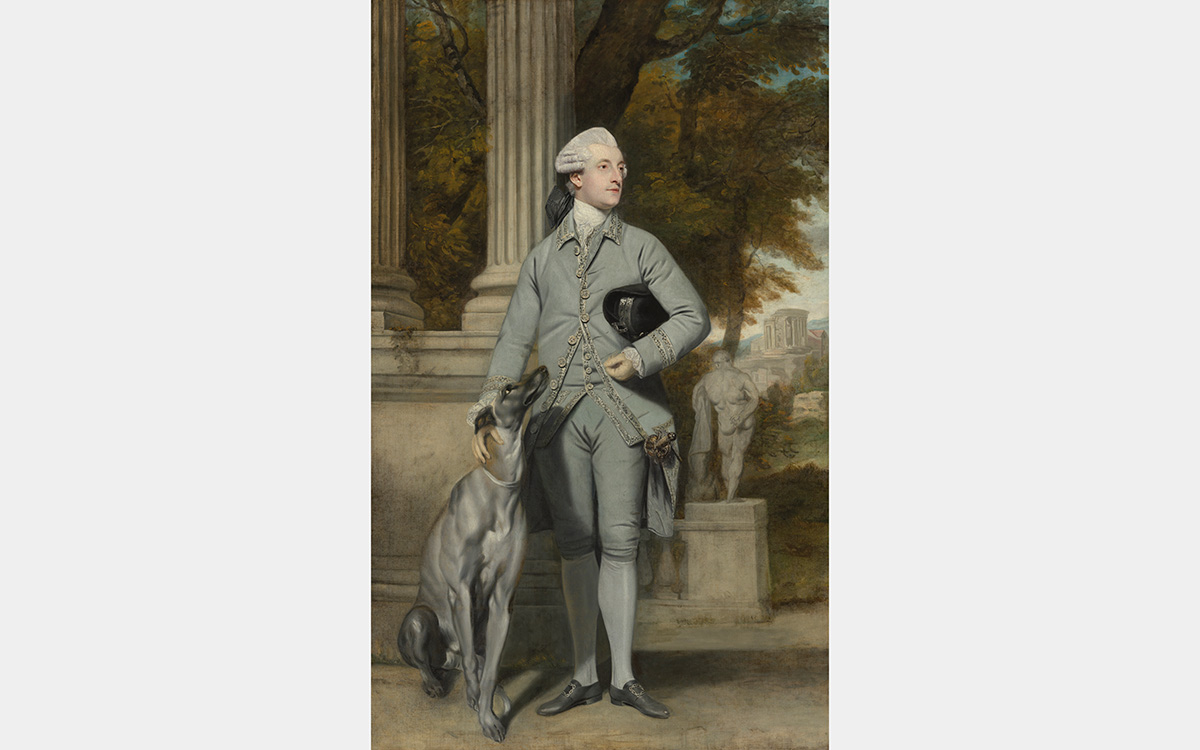
Sir Joshua Reynolds (English, 1723–1792), Richard Peers Symons, M.P. (Later Baronet), 1770–1771, oil on canvas, Museum Purchase: Bequest of Mr. and Mrs. Walter J. Wichgar, The Edwin and Virginia Irwin Memorial, John J. Emery Endowment, Fanny Bryce Lehmer Endowment, Mr. and Mrs. Harry S. Leyman Endowment, and gift of Mary Hanna, by exchange. Acquired in honor of Chairman of the Board John W. Warrington for 50 years’ service as Trustee of the Cincinnati Art Museum (1941–1991), 1991.62
Dog
Canis lupus familiaris
In this full-length, full-sized portrait, the artist Sir Joshua Reynolds portrayed nobleman Richard Peers Symons as a wealthy English gentleman surrounded by symbols of a cultivated lifestyle: fine clothes, fashionable wig, classical architecture and sculpture—and, of course, his finely bred hunting dog. The hound gazes up at Symons with a look of admiration, earning his title of “man’s best friend.” In form and temperament, the dog pictured here seems far removed from its wolf ancestors even though domesticated dogs and wolves share more than 99% of their DNA.
On view in Gallery 210.
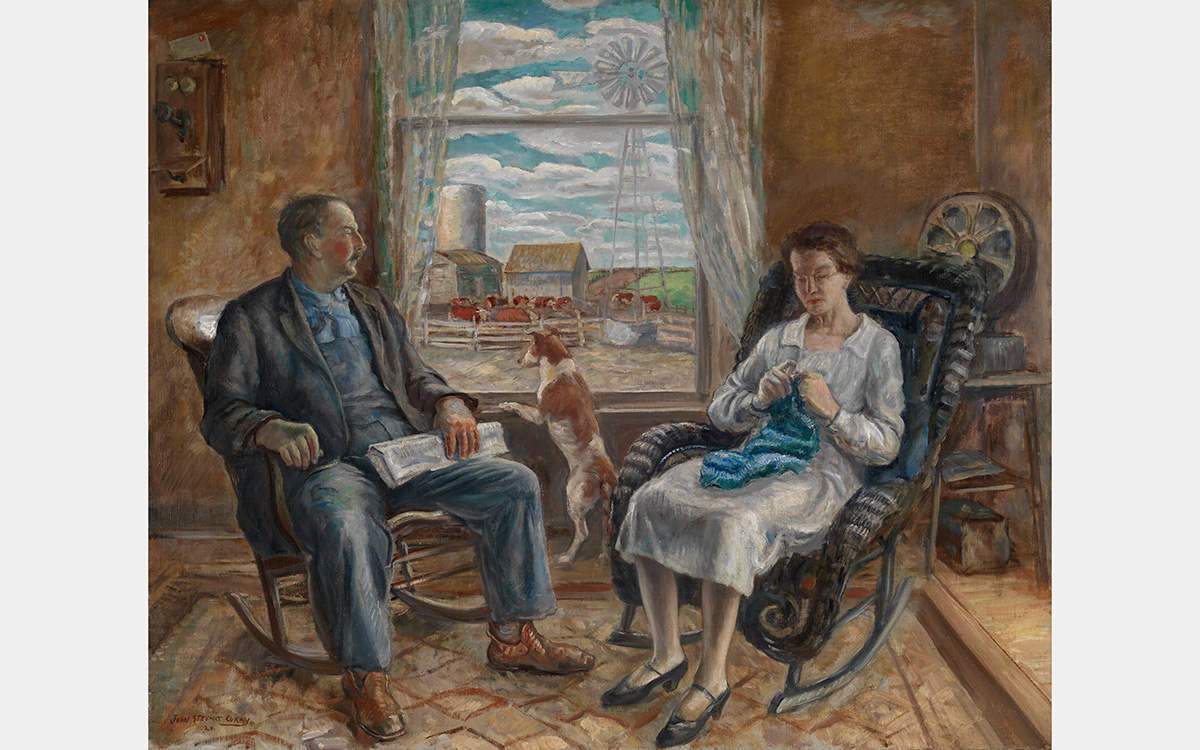
John Steuart Curry (American, 1897–1946), The Old Folks (Mother and Father), 1929, The Edwin and Virginia Irwin Memorial, 2002.46
Dog
Canis lupus familiaris
Artist John Steuart Curry captures a quiet moment featuring his parents inside their Kansas farmhouse; it’s a classic American setting including the family dog, the third member of this household. The terrier looks intensely out the living room window, perhaps fixated on a squirrel or other small animal that “ratters” were bred to hunt. It’s a scene that Curry once described as “a rare Americana,” and one that recalls cinematic images of the period from movies like 1939’s The Wizard of Oz … including Toto, too!
On view in Gallery 211.
Related Blog Posts


Cincinnati, OH 45202
Toll Free: 1 (877) 472-4226
Museum Hours
Museum Shop
Terrace Café
Library
Cincinnati Art Museum is supported by the tens of thousands of people who give generously to the annual ArtsWave Campaign, the region's primary source for arts funding.

Free general admission to the Cincinnati Art Museum is made possible by a gift from the Rosenthal Family Foundation. Exhibition pricing may vary. Parking at the Cincinnati Art Museum is free.
Generous support for our extended Thursday hours is provided by Art Bridges Foundation’s Access for All program.

General operating support provided by: