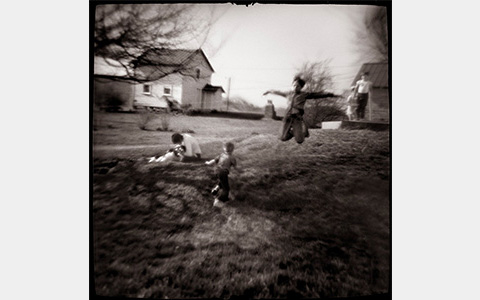
Nancy Rexroth (b. 1946), United States, Boys Flying, Amesville, Ohio, 1976, gelatin silver print, Courtesy of The 1988 Rexroth Family Trust
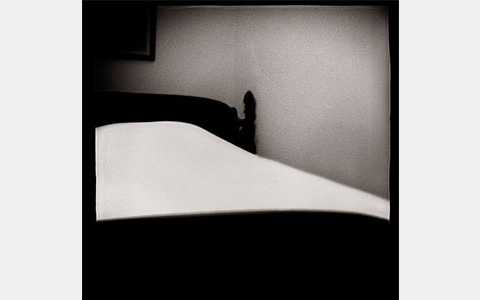
Nancy Rexroth (b. 1946), United States, A Woman's Bed, Logan, Ohio, 1970, gelatin silver print, Courtesy of The 1988 Rexroth Family Trust
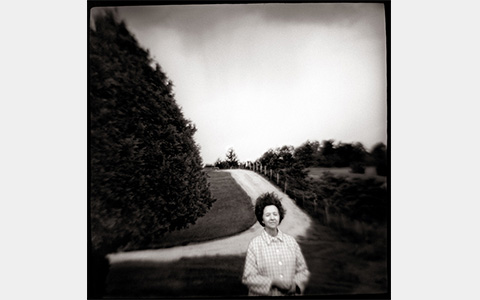
Nancy Rexroth (b. 1946), United States, My Mother. Pennsville, Ohio. 1970, gelatin silver print. © The 1988 Rexroth Family Trust
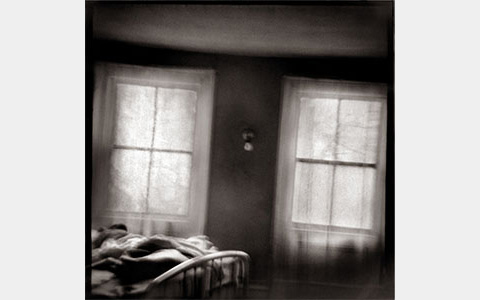
Nancy Rexroth (b. 1946), United States, Two Windows. Coolville, Ohio. 1971, gelatin silver print. © The 1988 Rexroth Family Trust
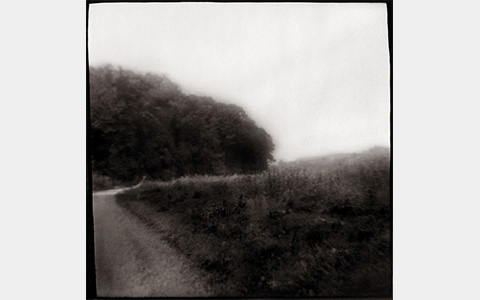
Nancy Rexroth (b. 1946), United States, Mountain. Carpenter, Ohio. 1973, gelatin silver print. © The 1988 Rexroth Family Trust
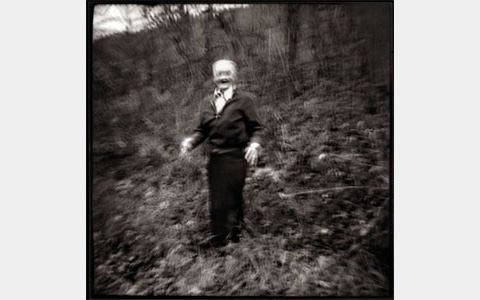
Nancy Rexroth (b. 1946), United States, Emmet Dances the Jig. Kreiger Falls, Ohio. 1974, gelatin silver print. © The 1988 Rexroth Family Trust
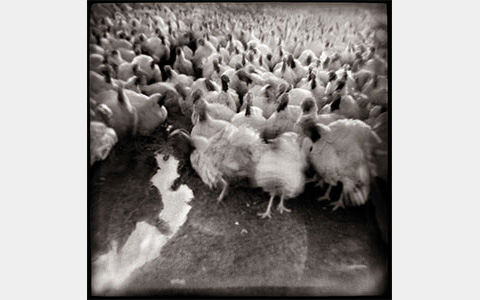
Nancy Rexroth (b. 1946), United States, Turkeys Advance, Albany, Ohio. 1973, gelatin silver print. © The 1988 Rexroth Family Trust
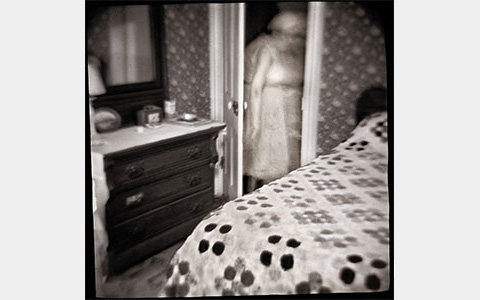
Nancy Rexroth (b. 1946), United States, Clara in the Closet. Carpenter, Ohio. 1973, gelatin silver print. © The 1988 Rexroth Family Trust
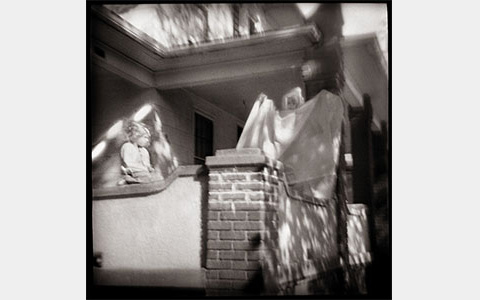
Nancy Rexroth (b. 1946), United States, Playing Ghost. Ironton, Ohio. 1974, gelatin silver print. © The 1988 Rexroth Family Trust
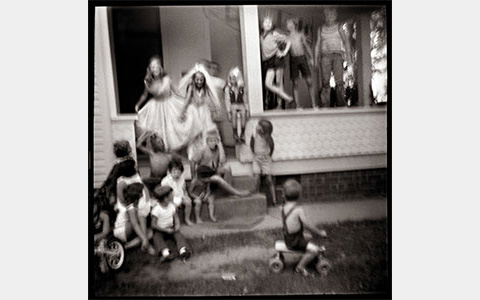
Nancy Rexroth (b. 1946), United States, Group Portrait. Albany, Ohio. 1974, gelatin silver print. © The 1988 Rexroth Family Trust
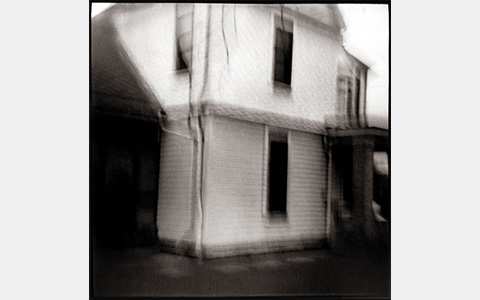
Nancy Rexroth (b. 1946), United States, Waving House, Vanceburg, Kentucky. 1975, gelatin silver print. © The 1988 Rexroth Family Trust
The Nancy Rexroth Collection
About the Archive
In the early 1970s, American photographer Nancy Rexroth (b. 1946) created a body of images that stands as a unique achievement in photographic history. Using a low-tech, plastic camera called the Diana, Rexroth rendered the rural world around Athens, Ohio as a waking dream of white clapboard houses, breathless movement, and half-remembered sadness. In 1977 she published a selection of these pictures under the title IOWA—a powerful, exquisitely personal book that has inspired countless photographers, and that continues to expand the parameters of the medium for viewers all over the world.
The Cincinnati Art Museum is honored to steward Rexroth’s artistic legacy. Numbering over 400 vintage prints, The Nancy Rexroth Collection was acquired directly from the artist through a collaboration that began in 2017. The collection addresses Rexroth’s entire creative output as well as practices by other artists in her networks beginning in the late 1960s. Highlights include many of Rexroth’s finest early photographs; a nearly complete set of Diana camera pictures from both the 1977 and 2017 editions of her pathbreaking book, IOWA; numerous previously unpublished and experimental images from the IOWA project; a corpus of her exceedingly rare platinum prints; and an extensive representation of her SX-70 transfer and late-career digital works. The collection also includes surprises, ranging from gum bichromate and cyanotype prints to a carousel slideshow and a group of experimental, unmounted film positives. A large portion of the collection is comprised of unique prints that exist in no other repository.
Formally completed in 2021, the acquisition of The Nancy Rexroth Collection was made possible by the 1988 Rexroth Family Trust, the Carl M. Jacobs Foundation, and numerous individual donors. In parallel, the Nancy Rexroth Papers were deposited at the museum’s Mary R. Schiff Library and Archives. This deposit includes Rexroth’s personal and professional papers, tools, working materials, and vernacular photography collection, among other materials. The museum’s representation of Rexroth’s life and creative milieux continues to grow through highly relevant gifts of artwork and ephemera.
Watch
In The Mind of Iowa and The Nancy Rexroth Collection (2021), CAM brings you fourteen minutes with some of the esteemed artists, curators, and collectors who have known and worked with Rexroth from the late 1960s to today.
Still curious? Take in a Q&A from the online premiere of The Mind of Iowa and Cincinnati filmmaker Ann Segal’s short conversational documentary, Light on IOWA. Rexroth and Segal are joined by Nathaniel M. Stein, CAM’s Curator of Photography.
About the Artist
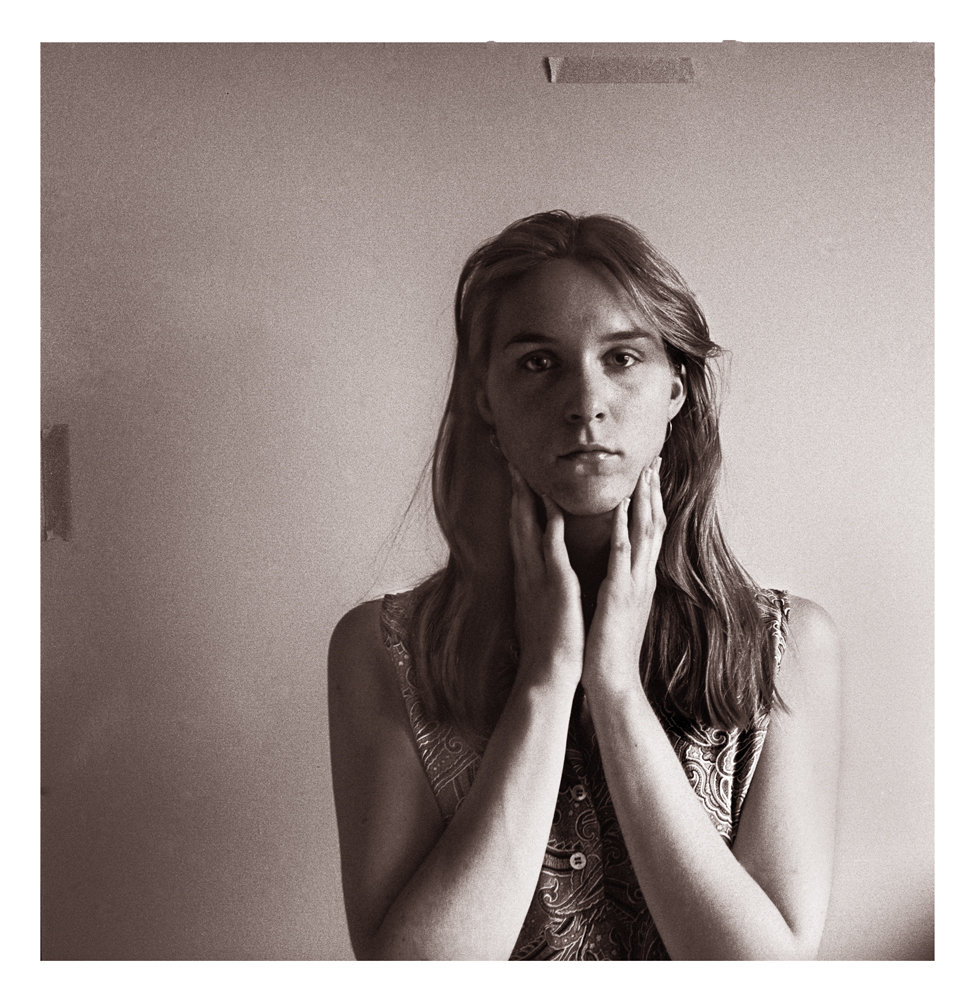
Born in 1946 and raised in Arlington, Virginia, Nancy Rexroth began studying photography in 1967 as an undergraduate at American University in Washington, D.C. She earned an MFA in photography at Ohio University in 1971, and in 1973 was among the earliest photographers to receive a Visual Artists Fellowship from the National Endowment for the Arts. Rexroth self-published her best-known work, IOWA, in 1977. From 1977 to 1983 Rexroth lived in Yellow Springs, Ohio, where she made bodies of work in platinum and SX-70 transfer while teaching photography at Antioch College and then Wright State University. She left her teaching career and settled in Cincinnati, Ohio in the mid-1980s. After a hiatus, in the 1990s Rexroth rekindled her relationship with the photography world and began exploring early consumer-level digital tools, completing two series of photographs using low-resolution digital cameras between 2000 and 2004. Since the mid-1970s, when Rexroth began showing at LIGHT (then New York’s preeminent gallery for contemporary photography), her work has been exhibited and collected internationally. She is currently represented by Weinstein Hammons Gallery. A revised, fortieth anniversary edition of IOWA was published by the University of Texas Press in 2017.
Throughout Rexroth’s career, her photographs have evinced a sophisticated, often boundary-pushing relationship with composition, figuration, and sensation—and perhaps most importantly, a deeply symbolic engagement with light. Her work can be understood as an assertion of self, drawn with emphatic power through indirect terms, in pictures that aim to touch and hold something beyond picturing.
For more information and to find out how you can support the research, care, and interpretation of the Nancy Rexroth Collection, please contact [email protected].
Long overdue recognition comes for a groundbreaking photographer
Soapbox Cincinnati, July 16, 2019
The Cincinnati Art Museum Acquires The Nancy Rexroth Collection
CityBeat, May 6, 2019
A 1958 Green Book Sets Auction Record, and Cincinnati Art Museum Acquires Nancy Rexroth Collection
Hyperallergic, April 4, 2019
The Cincinnati Art Museum to make landmark acquisition of photographer Nancy Rexroth’s archive
Cincinnati Art Museum, April 2, 2019
Cincinnati Art Museum Acquires Collection Of Photography Pioneer Nancy Rexroth
WVXU, April 1, 2019
Conservation support provided by

Cincinnati, OH 45202
Toll Free: 1 (877) 472-4226
Museum Hours
Museum Shop
Terrace Café
Library
Cincinnati Art Museum is supported by the tens of thousands of people who give generously to the annual ArtsWave Campaign, the region's primary source for arts funding.

Free general admission to the Cincinnati Art Museum is made possible by a gift from the Rosenthal Family Foundation. Exhibition pricing may vary. Parking at the Cincinnati Art Museum is free.
Generous support for our extended Thursday hours is provided by Art Bridges Foundation’s Access for All program.

General operating support provided by: